

Recent Publications
Maria Stehle and Beverly Weber. “Decolonial Queer Futures in No Hard Feelings [Faraz Shariat, Futur Drei 2020].” EuropeNow. Special Feature on European Culture and the Moving Image. Eds. Ipek Çelik Rappas, Michael Gott and Randall Halle. Sec. Research. No. 43, September 2021. https://www.europenowjournal.org/2021/09/13/decolonial-queer-futures-in-no-hard-feelings-faraz-shariat-futur-drei-2020/
Carrie Smith, Maria Stehle and Beverly Weber. “Intimate Collaborations and Feminist Gatherings: A Manifesto for a Coalitional Academy.” Feminist German Studies, vol. 36, no. 1, University of Nebraska Press, June 2020, pp. 128–43. https://doi.org/10.1353/fgs.2020.0010 .
Beverly Weber. “Intersectionality and Refugee Justice: Feminist Approaches to Insecurity and Precarity.” The Routledge Handbook of Transformative Global Studies. Eds S. A. Hamed Hosseini, James Goodman, Sara Motta, and Barry K. Gills. Routledge, 2020: pp. 444-459.
Maria Stehle and Beverly Weber. “Gifts of Welcome: Precarity, Intimacy, and the Gift in Die Farbe des Ozeans (Peren, 2011) and Welcome (Lioret, 2009).” Northern Lights: Film & Media Studies Yearbook, edited by Temenuga Trifonova, vol. 18, 2020: pp. 69-83. https://doi.org/10.1386/nl_00014_1
Beverly Weber. “Islamophobia East-West and the Politics of Hospitality in Contemporary Germany.” Journal of Contemporary European Studies, vol. 28, no. 1, 2020: pp. 44-56. https://doi.org/10.1080/14782804.2019.1651700 (Online publication 2019)
“Refugees and Islam: Representing Race, Rights, Cohabitation.” Journalism, Gender and Power. Eds. Cynthia Carter, Linda Steiner and Stuart Allan. Routledge, 2019.
“Introduction: Precarity/Heimatlosigkeit.” Seminar, A Journal of Germanic Studies, vol. 54, no. 4, 2018: pp. 411 – 417. With Gabi Kathöfer. [read more]
“Heimat, Sustainability, Community: A Conversation with Karina Griffith and Peggy Piesche.” Seminar, A Journal of Germanic Studies, vol. 54, no. 4, 2018: pp. 418 – 427. With Gabi Kathöfer. [read more]
“Precarious Intimacies: Politics and Solidarities in Emine Sevgi Özdamar’s Die Brücke vom Goldenen Horn.” Gegenwartsliteratur: A German Studies Yearbook, vol. xvii, 2018. pp. 115-113. [read more]


Firma “Neger” in Mainz: Streit um Firmenlogo eskaliert – Politik – Tagesspiegel Mobil
Firma "Neger" in Mainz: Streit um Firmenlogo eskaliert - Politik - Tagesspiegel MobilDrohanrufe, Hassmails, Nazi-Parolen – die Debatte um das umstrittene Logo der Handwerksfirma "Thomas Neger" in Mainz wird heftiger. Befürworter und Gegner werfen sich gegenseitig vor,...

Politische Korrektheit: Ich, Zigeuner –
Politische Korrektheit: Ich, Zigeuner -This was posted on Google+

Kopftuch: Stoff für Verkrampfte
Kopftuch: Stoff für VerkrampfteDas Kopftuch gehört in deutsche Schulen. Eine Replik auf Iris RadischThis was posted on Google+

College tuition is getting more expensive. Here’s who’s actually to blame.
College tuition is getting more expensive. Here’s who’s actually to blame.The real reason is more nuanced than what a recent New York Times piece suggests.This was posted on Google+

http://mobile.nytimes.com/2015/04/05/opinion/sunday/the-real-reason-college-tuition-costs-so-much.html…
http://mobile.nytimes.com/2015/04/05/opinion/sunday/the-real-reason-college-tuition-costs-so-much.html?referrer=?This was posted on Google+

http://chronicle.com/blogs/profhacker/digital-and-analogue-writing-with-livescribe/59763
http://chronicle.com/blogs/profhacker/digital-and-analogue-writing-with-livescribe/59763?This was posted on Google+

Why America’s obsession with STEM education is dangerous
Why America’s obsession with STEM education is dangerousAlongside technical skills, America needs the creativity that a liberal arts education provides.This was posted on Google+
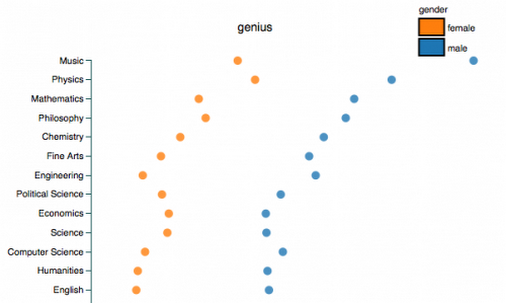
Beyond Bossy or Brilliant: Gender Bias in Student Evaluations » Sociological Images
Beyond Bossy or Brilliant: Gender Bias in Student Evaluations » Sociological ImagesNot surprisingly, the new interactive chart Gendered Language in Teacher Reviews has been the subject of a lot of conversation among sociologists, especially those of us who study...

Why White People Freak Out When They’re Called Out About Race
Why White People Freak Out When They're Called Out About Race'White fragility' is a defensive response to real conversations about race.This was posted on Google+

Education becomes policing, and the school to prison pipeline is strengthened.
Education becomes policing, and the school to prison pipeline is strengthened.?Adult interrogation tactics in schools turns principals into police officers | Alexa Van Brunt | Comment is free | The GuardianThis was posted on Google+